

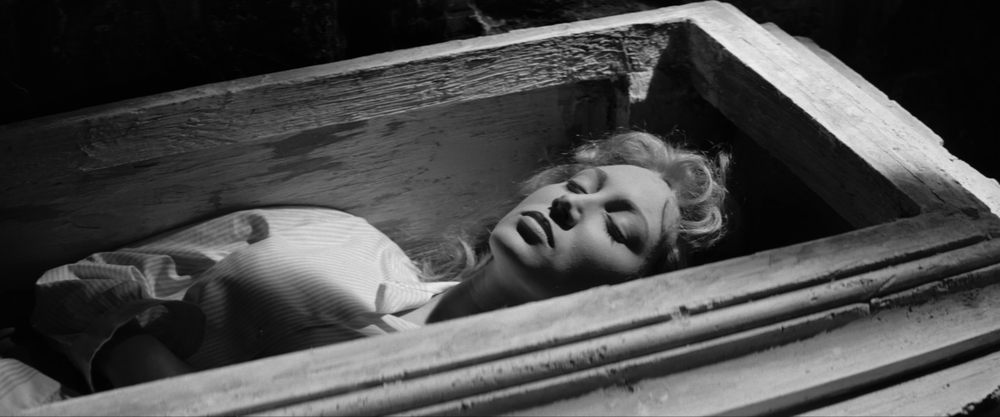
Those who know director Mario Bravas’ approach to horror won’t be surprised at the often casual, Zen-like approach to narrative which underlays Lust of the Vampire (I Vampiri, 1957).
Rest easy, all the gothic elements are intact. A dank, dark castle. Beautiful young women disappearing, their whereabouts unknown. Police who ridicule any talk of monsters. Clouds of fog. Evil doctors. And a pale-faced queen of darkness who rules them all.

But there is little violence. Perhaps a gunshot. Maybe a blood-curdling scream. However, there is dread—and plenty. That’s the impact of the aforementioned narrative structure. Just when you’re settling into the comfortable confines of a melodrama—boom!
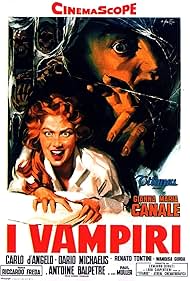
This is a film about the impenetrability of Time. No matter how influential and wealthy someone may be, Time exercises democratic principles. No deals. Ever.
Lust of the Vampire is Italian and takes place in Paris. The clash of cultures also adds a strange background patina. It’s just one more disorientation.
Many horror films portray the terrible consequences of purposely upsetting the Life-Death cycle. In Lust of the Vampire, salvation is offscreen and gentle, offering an atypical resolution of mercy and forgiveness. Mario Bava often portrays human nature as a kind of panoply of bizarre objects, collected in a basement or attic, covered in dust, decay and sorrow, waiting to be cleansed and redeemed by the Life Force itself.
#mariobrava #lustofthevampire #italian #horror #ivampiri #dracula #review #cult #film #letsplaysomethingelse
 Let's Play Something Else