
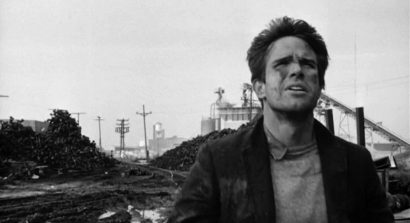
Hard to believe Mickey One was financed by a major studio (Columbia): back in 1965, director Arthur Penn must have risen to Clarence Darrow-like persuasion as he pitched it to confused film executives. For this is a film about existentialism, about the negation of freewill. It’s black & white and steeped in noir. For a point of reference, major films of the same year included Dr. Zhivago and The Sound of Music.
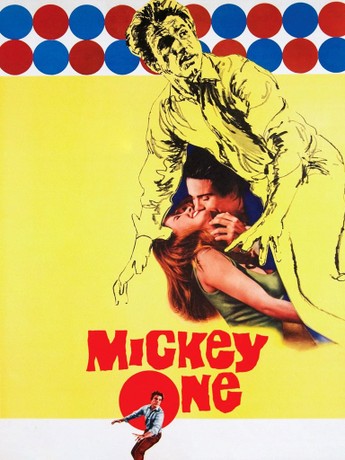
Warren Beatty plays a standup comic in Detroit. Yes, Detroit. He learns that the mob has taken out a contract on his life—but he doesn’t know why… So, he splits for Chicago, changes his name to Mickey One, and enters a true film noir scenario, replete with strip clubs, midnight alleys, neon lights, tough-talking women and downtrodden men.
Kafkaesque: adjective: of, relating to, or suggestive of Franz Kafka or his writing especially having a nightmarishly complex, bizarre, or illogical quality.
That overused adjective sums up the tone of the film—it is nightmarish and does have an illogical quality… as if Beatty has lost control of his fate and doesn’t know who controls it or why.

Google ‘existential films’ and you realize that a lot of great work has been made on this most elusive of themes… Mickey One feels incomplete, attenuated, trying to tell a tale it doesn’t understand. Existentialism defies resolution.
“There is no reality except in action,” said Jean-Paul Sartre. “Man is nothing else than his plan; he exists only to the extent that he fulfills himself.”
Mickey One is a man emasculated by fear, light years from fulfillment, on the run from phantoms, tired of living and battling an enemy who will never, ever accept a surrender. How do you end a movie like that?
#mickeyone #warrentybeatty #arthurpenn #filmnoir #existentialism #film #review #retro #letsplaysomethingelse #bonnieandclyde
 Let's Play Something Else