
Sisters to the end
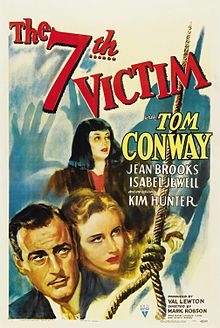
The Seventh Victim (1943)—somewhere along the way—picked up the designation of ‘horror-noir’. Certainly, it is a noir, replete with shadows, snap-brim hats, foggy midnight streets, and femmes who are certainly fatale. And it’s a horror flic, with murder and suspense and cults and grisly deaths. Horror-noir is not an especially rare combination of genres (think The Night of the Hunter or half the opus of David Lynch), but it’s difficult to make it work—requiring a thematic balancing act.
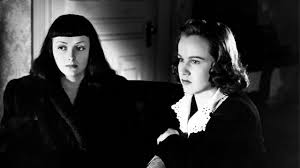
We have two sisters, one good, one bad, one life-affirming, one suicidal. The good sister, Mary Gibson (played by a wholesome Jean Brooks) enamours men with her cheery moral fortitude. Her sister, Jacqueline (Isabel Jewel) has gone Goth (all black hair with drop-dead bangs and vampiric robes), murmurs vaguely existentialist pap while staring at walls. We learn that Jacqueline, at one point, had joined with satan worshippers but eventually quit the cabal. It seems Jackie has been ratting out the demon lovers and they want revenge—in the form of her suicide.
What to make of the pre-Rosemary Baby cult whose appearance comes as much of a surprise as the vampires in From Dusk Till Dawn? Suddenly, the narrative swerves around Dead Man’s Curve. We have a genre symbiosis that works, with the strength of each empowering the other.

There’s a requisite group of lawyers, psychiatrists, private eyes—all trying to fit it together. As common with most films of this era, any character who has done something bad must pay. American film, until the early 1970s, rarely offered character redemption. Sorry, if you transgress the law, you gotta pay.
This film has gained cult status notably for its use of nihilism and homoeroticism. Here’s film historian Steve Haberman, speaking of Jacqueline’s character: “Her life is…meaningless…trying to find meaning, always failing and in the end seeking a sort of peace through death.” Critics have noted homosexual undercurrents, particularly in Jacqueline’s character and her relationship with Frances, a cult member who is an employee at the company she formerly owned. Film theorists Harry M. Benshoff, comments, “While it could have easily fallen into the trap of using gay and lesbian signifiers to characterize its villains (i.e., homosexual = Satanist, as did Universal’s The Black Cat in 1934), the film is much more complex than that.”
More complex indeed. The Seventh Victim embraces the existential pain of noir, the impossibility of happiness that lasts beyond sunrise, and the deep, brooding background noise of horror, never to be seen, only felt, and endured.
#theseventhvictim #film #noir #horror #review #cult #davidlynch #georgeclooney #satanic #rosemarysbaby #existential #homoerotic #retro #7thvictim
 Let's Play Something Else