
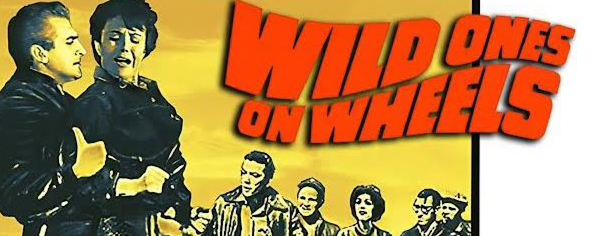
It’s the aggressive clumsiness of Wild Ones on Wheels (1962) that casts an odd effect: you feel like you’re watching a home movie. It’s too intimate to be staged. Everything—script, acting, directing, camera, editing—seem so uninspired that there’s no way, you believe, this is a professional production. This is real.
(Years later, The Blair Witch Project played the amateur vibe to great effect. Roger Corman, in part, built a career on it).
As for the plot, a gang that seemingly has access to fast cars (wheels), believes an ex-con has hidden $250,000 cash and they want it bad, real bad.
In the hands of Russ Meyer, this plot might have worked—because Meyer knew how to parody sexuality without a whiff of apology. Perhaps he borrowed from it for his masterpiece, Faster Pussycat, Kill, Kill! —as the bulk of the action takes place in barren desert. This begets the ‘foreign film syndrome’ whereby—through cultural disorientation—you fight to keep your critical appraisal reflexes. Are they overacting? Is the script really that wooden? Did I just see a boom mic hit someone’s forehead? In this moonscape, it seems anything goes.
Films like Wild Ones on Wheels, and other exploitation pieces, are important. They throw into relief not only what makes a good film, but what makes a bad film enduring. And for that, they are as essential as masterpieces—almost.
#wildonesonwheels #cult #film #review #rogercorman #easyrider #peterfonda #russmeyer #fasterpussycatkillkill #letsplaysomethingelse
 Let's Play Something Else