
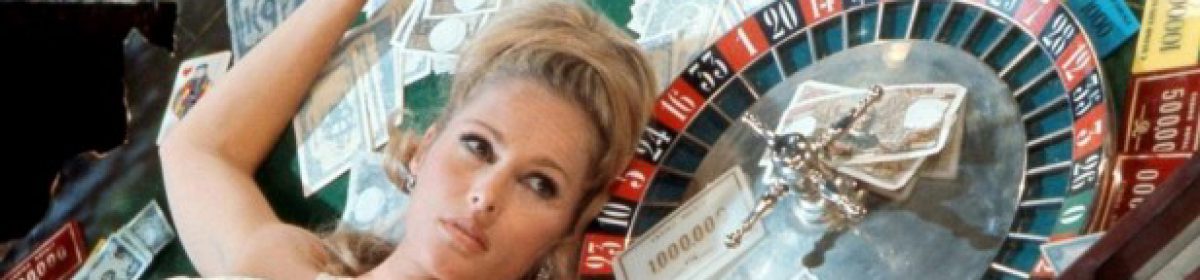
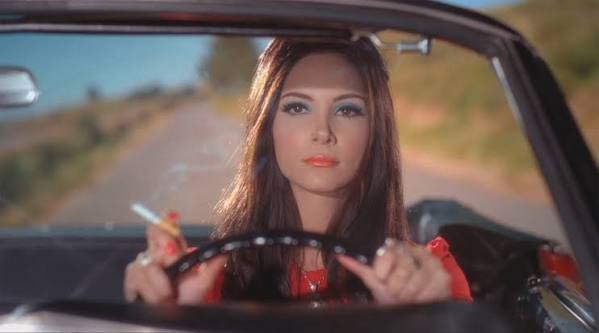
Whenever a filmmaker—or any artist—creates a work that employs aggressive retrospective tropes and imagery, it is fair to question why. Is the work a homage (see Tarantino)? Does it call on the past as a narrative device, thereby contrasting past norms with the present? The Love Witch (2016), taps soft core/action, early 70s B films, e.g. The Velvet Vampire (1972), stylistically and thematically, but to what purpose?
Director Anna Biller was busy. Aside from her role behind the camera, she wrote, edited, produced, and scored the film—as well as created some props and costumes.
Biller is described as feminist filmmaker whose approach to cinema is influenced by feminist film theory. Keep that in mind.
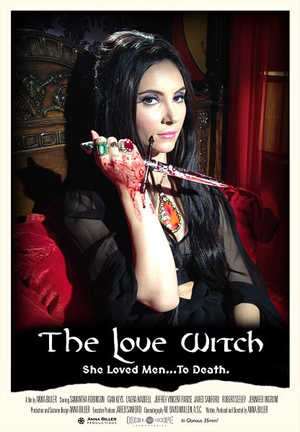
The film follows a young witch, Elaine Parks (Samantha Robinson) who travels to a small town in California which tolerates witches. She finds a rooming house and makes a few friends. It doesn’t take long before male bodies begin piling up. Elaine is suspected.
According to a review at the time of release, the film presents the witch as a metaphor for women in general, as both an embodiment of men’s fears of women, and of women’s own powers of intuition and as mothers and sorceresses. Therein lies the confusion.
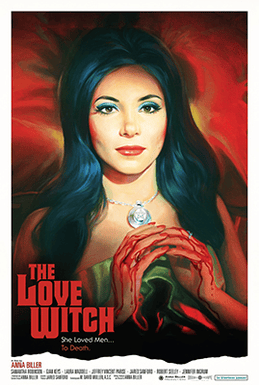
Why go retro? Could the film have been set in 1982? 1992? 2002? Would it make any difference toward the goal of dramatizing societal failings? Are the blood-soaked acts of violence to be taken as expressions of feminist rage toward men, or an engaging pastiche? Or both, perchance? If the film was set in 2016, how would we feel about young men being drugged and slaughtered? Does ‘retro’ provide enough layers of dark irony to bury the dead without question and compassion?
Ultimately, The Love Witch trips on the scattered debris of its own intentions. Though wonderfully stylish (and a darling of independent film), it lacks the simplicity and refreshing monochrome messaging of its much beloved progenitors.
#lovewitch #2016 #retro #film #review #samanthaeobinson #annabiller #letsplaysomethingelse

